
Checking Criminal History in Miami
Miami has no one-stop city portal. Start with the office that created or now holds the record. The Roberts County sheriff handles the documented local law enforcement route. Filed county and district causes are kept by the combined County/District Clerk at the courthouse. Fine-only matters within the Justice Court’s authority go to the justice of the peace. Texas DPS supplies a public statewide conviction and qualifying deferred-adjudication search, not a complete Miami police or booking file.
- Call the Roberts County sheriff for an incident, arrest, booking, warrant, or current custody question and ask which facility received the person.
- Send a focused written Texas Public Information Act request to the sheriff for existing releasable reports or booking data.
- Contact Suite 104 for a filed felony or county misdemeanor cause, docket, charging paper, disposition, judgment, or sentence.
- Use the Roberts Justice Court for a fine-only or JP matter. Do not assume a Miami municipal court holds it.
- Use DPS for the statewide public history subset, then TDCJ or BOP only if sentenced state or federal custody is relevant.
Keep the full name, event date, location, case or booking number, and a date range close at hand. A search can fail because the wrong custodian was asked, not because the event did not happen.
Miami Is the Only Incorporated City
Miami is Roberts County’s only incorporated community and its county seat. The 2020 Decennial Census profile reports 539 residents under geography code 16000US4847988. That small scale helps explain why local record access centers on county offices rather than a layered city bureaucracy. It also means one event can swing a per-capita crime rate by a large amount.
The Census also provides an official Roberts County and Miami comparison. Its urban and rural geography guidance helps place the town within the county’s broad rural territory.
Use raw annual counts and check whether the source represents the sheriff, a court, or another agency. The DPS Crime in Texas workbooks and official crime-records reports are the correct jurisdiction sources. A completeness report recorded one Roberts sheriff DWI charge in 2022 and one in 2023. Those figures describe a reporting workflow, not all Miami crime. No Miami police reporting row should be inferred where no Miami Police Department is documented.
Miami Police Department Records
No official Miami Police Department records page, police portal, city arrest blotter, mobile app, local clearance product, or separate city records unit was found. The verified local law enforcement channel is Roberts County Sheriff Bruce Skidmore. The Sheriffs’ Association of Texas publishes a physical address of 112 S. Main Street, while the county publishes P.O. Box 66, Miami, TX 79059, phone (806) 868-3121, fax (806) 868-6521, and bruce.skidmore@co.roberts.tx.us. Business hours are Monday through Friday, 8:00 a.m. to 5:00 p.m.
Call before walking in because the county page does not publish a distinct records lobby or counter procedure. For a written request, describe the incident or offense report, arrest or booking sheet, jail log, warrant record, 911 audio or CAD entry, or body-camera recording sought. Add the date, approximate time, location, agency case number when known, desired format, and contact details. Ask for an itemized estimate before chargeable work. A court pleading belongs with the clerk, not the sheriff.
Roberts County Sheriff
112 S. Main Street
P.O. Box 66
Miami, TX 79059
(806) 868-3121
Monday-Friday, 8:00 a.m.-5:00 p.m.
Start a Miami Arrest Record Search
A recent Miami arrest may not yet have a court cause. Call the sheriff with the person’s full name and the approximate arrest time. Ask for the booking identifier and the receiving facility. Roberts County publishes no jail roster or booking log. Historical jail standards material showed very small local capacity, and a 2024 county expense record proves that some inmate boarding occurred in Hemphill County. It does not prove that each Miami arrestee goes there.
After the sheriff confirms the actual destination, contact that official jail for custody and release information. Send the creating agency a written request for basic arrest or offense-report material. Then call the Roberts clerk to see whether a prosecutor has filed a cause. If none appears, check again. Filing can trail the arrest. The filed charge can also differ from the arresting charge because it may be declined, changed, enhanced, dismissed, or replaced by an indictment.
Note: Never apply another county’s roster or fee rules to Miami until the Roberts sheriff confirms the receiving jail.
Miami Arrests and Bookings
A Miami custody record begins with the arresting officer’s account and intake data. Booking can create an identifier, intake time, property inventory, identity details, fingerprints, a photograph, charge or warrant entries, screening data, custody class, bond details, and release information. Public access varies by field. Medical, security, juvenile, victim, and protected identifying details can be withheld or redacted.
The booking file and the court case do not answer the same question. A booking proves that custody occurred. A filed cause shows what prosecutors put before a court and how the judge resolved it. DPS later joins reported arrest, prosecution, and disposition events into the statewide criminal history system. Its public name search remains narrower than a person’s own fingerprint review. For a channel-complete treatment of current custody and booking fallbacks, use the Roberts County arrest lookup.
| Recent custody | Call the Roberts sheriff and ask which facility received the person. |
|---|---|
| Booking data | Request the booking number, intake time, charge, warrant, bond, housing, and release fields that can lawfully be released. |
| Filed charge | Ask the combined clerk for the cause and charging instrument after filing. |
| Final outcome | Read the disposition, judgment, and sentence from the court record. |
Miami Criminal Records at the Courthouse
The Roberts County Courthouse at 300 E. Commercial Street remains Miami’s main case-record building. The combined County/District Clerk occupies Suite 104. Call (806) 868-2341 or email debra.shewmake@co.roberts.tx.us with the full name, date range, offense, and cause number when known. Ask for the docket, charging instrument, disposition, judgment, sentence, and a copy or certification estimate. No local criminal copy fee, archive cutoff, or turnaround has been published.
The counter covers both county and district filings. The 31st District Court hears felony cases, while the constitutional Roberts County Court can hear Class A and B misdemeanors. The district judge’s administrative office is in Wheeler, but Roberts proceedings and local case custody still run through the Miami courthouse. Older or nonelectronic material may require staff retrieval.
The county contact display identifies the Miami courthouse address and main contact route.
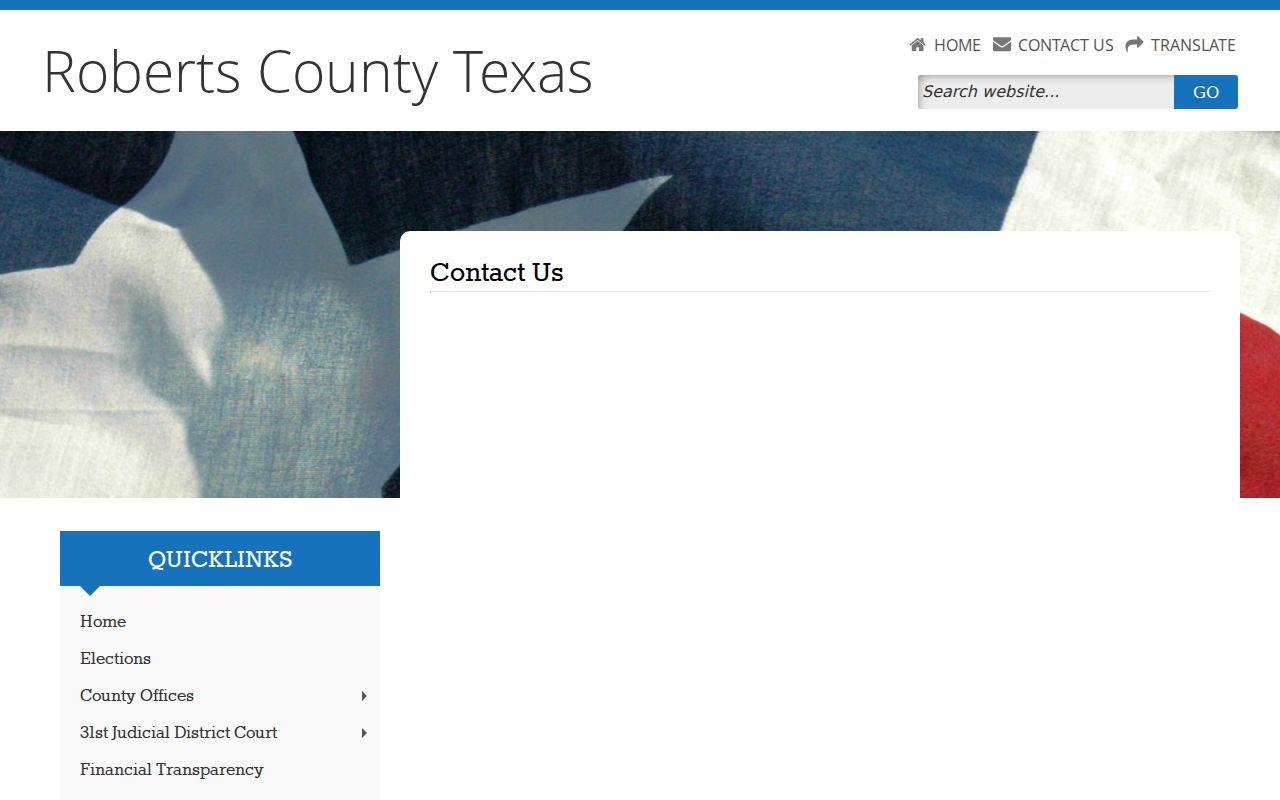
The display helps confirm the correct building before a records visit, while Suite 104 is the key criminal case counter.
Municipal Court Records in Miami
No Miami municipal court was confirmed in official county or city infrastructure. Do not search for or rely on an invented city docket. Fine-only matters that fall within countywide JP authority route to Justice of the Peace Daphne Wheeler in Suite 103. The office can be reached at (806) 868-4111 or jpcco@co.roberts.tx.us and is open weekdays from 9:00 a.m. to noon and 1:00 to 4:00 p.m.
The Justice Court web contact form asks for a requester name, phone, email, confirmation email, reason for inquiry, and a human-verification response. It is a contact form, not a searchable docket. County misdemeanor records go to the Roberts County Court route, and felony records go through the 31st District Court and combined clerk.
| Court name | No Miami municipal court confirmed; use Roberts Justice Court when the matter is within JP authority. |
|---|---|
| Case types | Fine-only matters and magistrate functions within Justice Court jurisdiction. |
| Lookup channel | Phone, email, office contact, or the official inquiry form; no case database is published. |
| Docket request | Provide the person, date range, citation or cause number, and reason for the records inquiry. |
| Copies and fees | Ask the court for a current estimate; no Miami municipal fee schedule exists in the research. |
Plan a Friday Miami Record Visit
The courthouse publishes 8:00 a.m. to 5:00 p.m. hours Monday through Thursday and 8:00 a.m. to noon Friday. A Friday afternoon trip can therefore fail even when the right custodian has been identified. Call the specific office before setting out, especially if the record is old, stored off the active counter, or needs certification.
Miami lies on US 60 between Canadian and Pampa, and Roberts County spans about 924 square miles. Travel time makes advance contact more than a convenience. Ask whether the record is on site, what identifiers will help staff find it, whether copies can be sent, and what current cost and payment method apply. No official parking map, security rule, transit stop, or entry-screening policy was found. Do not assume those details.
Where Miami Records Go
Because no Miami police department is documented, a local incident starts with the Roberts County sheriff or another authorized arresting agency. The sheriff keeps the incident and arrest side. A prosecutor decides what to file. The combined clerk keeps the county or district court cause, while the JP holds matters within Justice Court authority. Agencies and courts then report qualifying events to the Texas Department of Public Safety Crime Records Division.
Record flow: Roberts County Sheriff › Roberts County courts › Texas Department of Public Safety
That sequence explains why the same name can produce different results. The sheriff may have a recent event before the clerk receives a cause. The court may have a dismissal or sentence that has not yet reached DPS. The public DPS product only displays convictions and qualifying deferred adjudications under Government Code Section 411.135. Correct an error with the source custodian first. The state record can be challenged after the local source is checked.
Miami Courthouse Records Landmark
Miami won the county-seat contest in 1898. Citizens later voted 116 to 11 for the present courthouse. A $40,000 bond funded the project, Bone and Parr submitted a $43,845 construction bid, and the building was accepted in October 1913. The Classical Revival structure is not just local scenery. It is still the place where a person asks for Miami felony and county misdemeanor case files.
Architect Elmer George Withers designed its brick exterior, columned porticos, stairs, cast-stone balustrade, and mission-tile roof. Interior restoration retained marble wainscot, patterned tile, ornamental plaster, and the mosaic star, with a rededication in 2012. The restored courtroom and clerk counter make the records route tangible in a town with no municipal portal.
The Texas Historical Commission Atlas provides the official search route for the courthouse landmark.
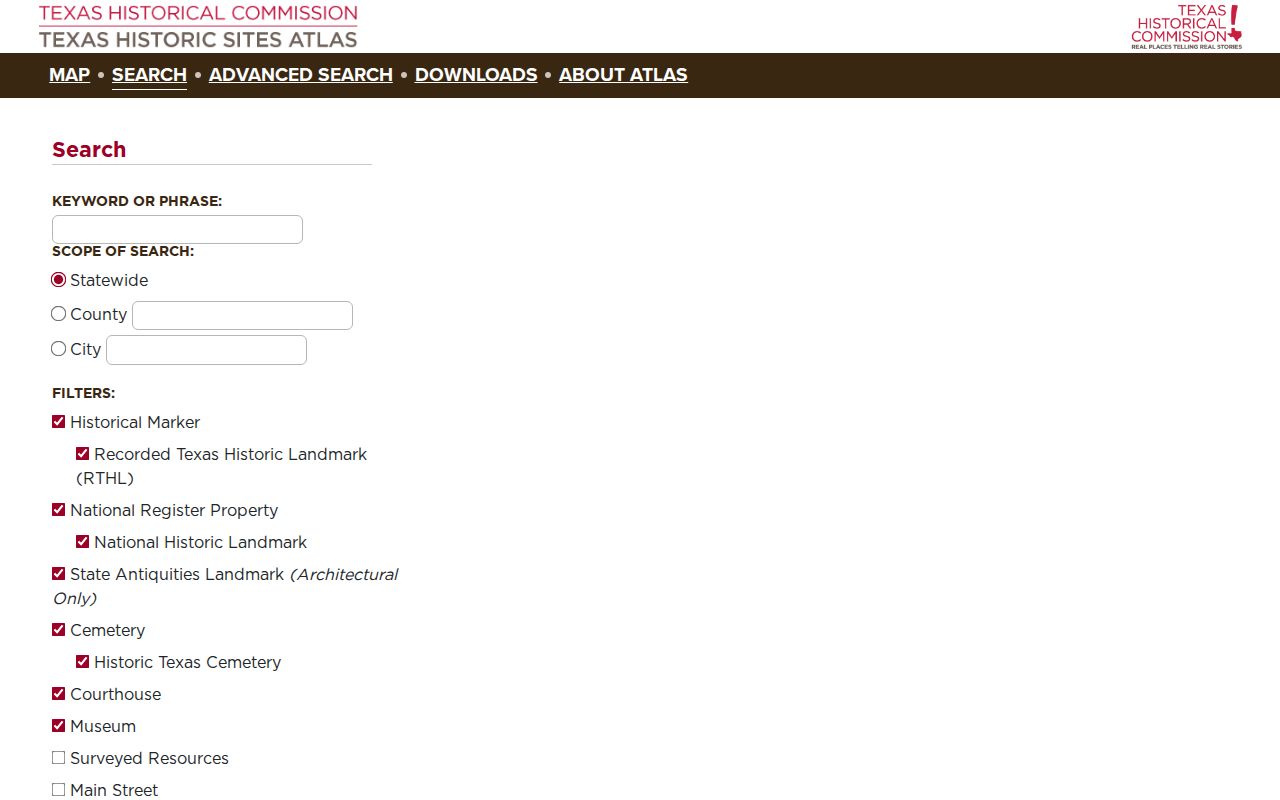
The Atlas connects the historic building to the same Miami records location still used for county and district files.
Miami DPS Criminal Record Search
The Texas DPS Public Criminal History Search can supplement Miami office checks. A public account search costs one $1 credit, including a no-match result. A mailed DPS CR-42 request costs $10 per person. Both return the public statewide subset authorized by Government Code Section 411.135, chiefly reported convictions and qualifying deferred adjudications. Neither is a Miami arrest blotter, a complete rap sheet, or a substitute for the clerk’s case documents.
Use the subject’s name and identifying details, then compare any match with the original court. A no-match result can reflect the product’s legal scope, reporting lag, identity differences, or an event that never produced a public disposition. A person reviewing their own record can follow DPS Crime Records guidance for the fingerprint-based personal review that avoids common-name ambiguity. Miami-specific depth should still begin with the sheriff and courthouse because they hold the source records.
Note: A correct DPS no-match can still leave a Miami incident report or a court file outside the public statewide product.
Public Access Rules in Miami
The Texas Public Information Act applies to existing nonconfidential executive-agency records held by the sheriff. It does not require an office to answer open-ended questions or create a new report. Ask for a defined record and date range. Government Code Section 552.108 can protect specified law enforcement or prosecution information, while confidential identifiers, juvenile data, victim details, and active-investigation material may be withheld or redacted.
Court files follow judicial access rules rather than treating every clerk record as a standard agency TPIA file. Full criminal history is also confidential except as Chapter 411 permits. The public DPS search is a statutory subset. These boundaries make a narrow request to the correct Miami-area custodian more effective than a broad demand sent to several offices.
Key statutes:
Texas Government Code Sections 552.021 and 552.221 require prompt access to existing public information through its custodian.
Texas Government Code Section 552.108 permits withholding of specified law enforcement and prosecution information when its conditions apply.
Texas Government Code Section 411.135 defines the narrower public criminal history product made available by DPS.
Miami Criminal Record History Trail
Miami began with a stage stop in 1879, and B. H. Eldridge platted the rail town in 1887. Cattle shipping, ranch work, oil hopes, and the Santa Fe line shaped its growth in the Red Deer Creek valley below Mount Moriah. The Roberts County Museum now occupies a restored Santa Fe depot. Those sites offer local history, while official criminal case papers remain with the courthouse custodian.
The distinction helps genealogy and historical research. Museum or Atlas material can establish place and civic context. A clerk docket can establish what a court filed and decided. The sheriff can address an incident or arrest record that remains releasable. Miami’s cowtown traditions, the National Cow Calling Contest and Old Settlers’ Reunion, the 1968 tornado, and nearby Clovis-era finds add context, but none substitutes for the original justice record.