
Checking Criminal History in Roberts County
Start a Roberts County criminal record search by naming the record you need. A recent arrest or local incident belongs with the Roberts County Sheriff. A filed felony or misdemeanor case belongs with the combined County/District Clerk. Fine-only Justice Court matters have a third custodian. The Texas Department of Public Safety adds a statewide public history, but its name search is not the same as a Roberts County court file. Full name, date of birth, an approximate event date, and any case or booking number will make each request more precise.
Use this order when the record type is not yet clear:
- Call the Roberts County clerk at (806) 868-2341 before a courthouse trip. Ask which court holds the cause and whether the file is on-site.
- For an incident, arrest, booking, or warrant, call the Roberts County Sheriff at (806) 868-3121 and ask which office or receiving jail has the source record.
- Use re:SearchTX only as a supplement. A missing result does not prove that no Roberts County case exists.
- Use the DPS public search for the statutory Texas conviction and qualifying deferred-adjudication subset. Match names and birth dates with care.
- For your own full Texas history, use the DPS fingerprint review route. Confirm any wrong entry with the office that first made it.
The DPS public criminal-history instructions show how the state name search works.
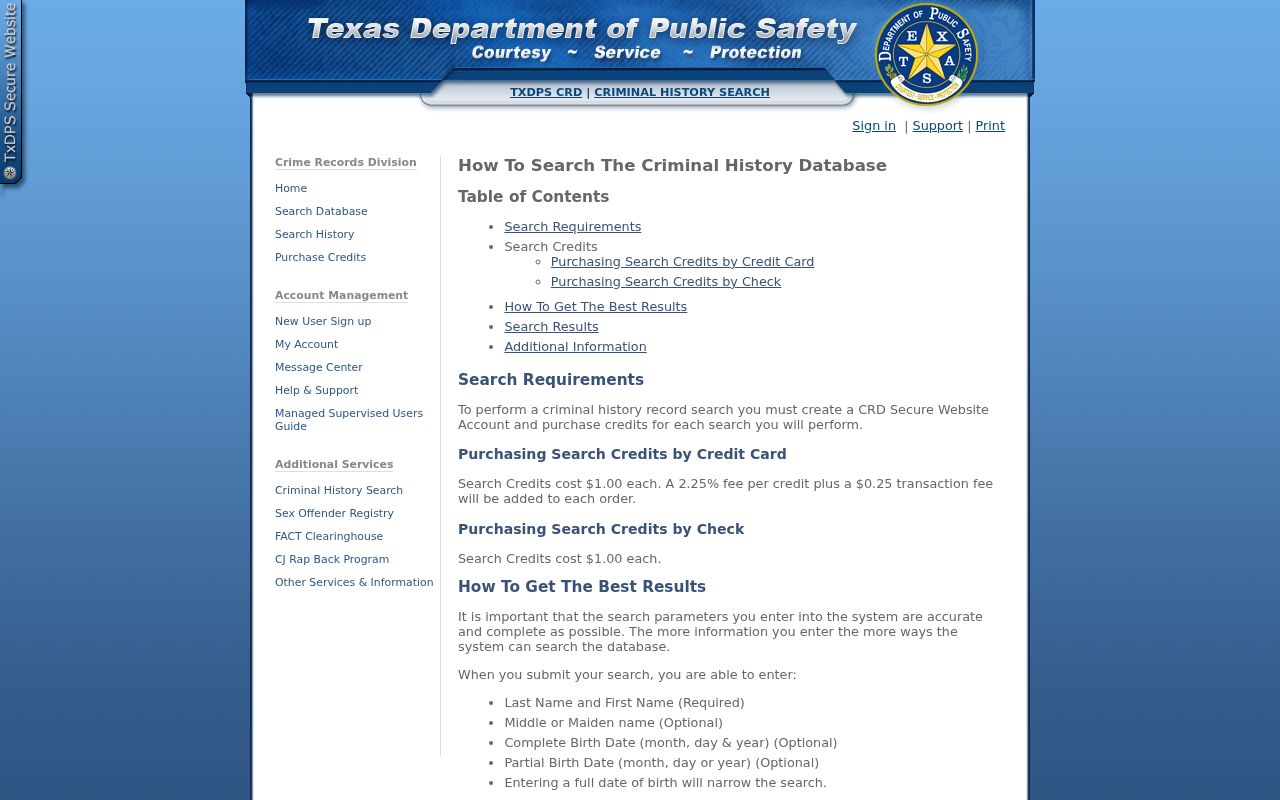
The state screen is a useful second layer, while the Roberts County sheriff and clerk remain the source for local booking and case detail.
Three Roberts County Record Systems
One event can create three records that answer three different questions. The Roberts County Sheriff records the encounter, arrest basis, intake, bond, and custody path. The Roberts County combined clerk records the filed charge, docket activity, plea, orders, disposition, and sentence. DPS then joins reported arrest, prosecutor, and court data into the Computerized Criminal History system. A booking proves custody took place. It does not prove guilt. A clerk file shows what was prosecuted. The DPS public product shows only the part Texas law makes public.
This is also why dates may not line up. A fresh Roberts County booking can exist before a cause number does. A clerk judgment can appear before the disposition reaches DPS. An alias or common name can split or merge possible matches. The practical flow is Sheriff record → prosecutor decision → clerk case → DPS history. When one layer conflicts with another, ask the custodian of the source record to check it.
The official Roberts County homepage gives the courthouse location, hours, and department routes.
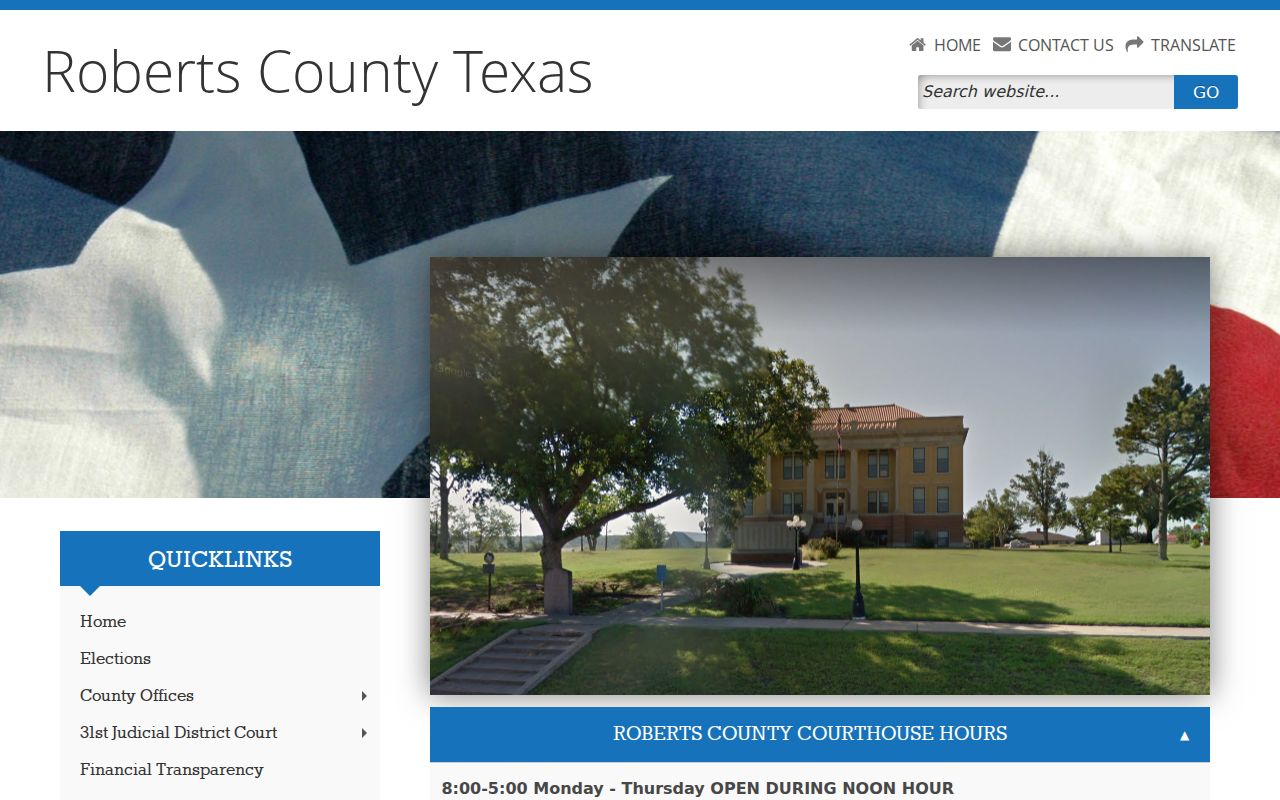
That county directory matters because Roberts County does not publish a single local criminal-history portal that replaces its separate record custodians.
Texas Official Background Checks
The Texas Department of Public Safety Crime Records Division keeps the statewide CCH repository. A public user may open an account and run a name-based search of public conviction information and certain deferred-adjudication information. Each online search uses one $1 credit, even if no match appears. Card credit purchases add 2.25 percent per credit and a $0.25 transaction charge. A mailed CR-42 request costs $10 per person. Both routes differ from a direct Roberts County case-file request.
For self-review, fingerprints provide the stronger identity match. DPS personal review uses FAST service code 11FT12 and has a verified $25 base total. The FBI Identity History Summary is another subject-only fingerprint product and carries an $18 FBI fee, with capture or channel costs separate. No IdentoGO site was confirmed in Roberts County. Enter ZIP 79059 in the live scheduler to see current nearby appointments.
The DPS criminal-history application is the account and search entry point.
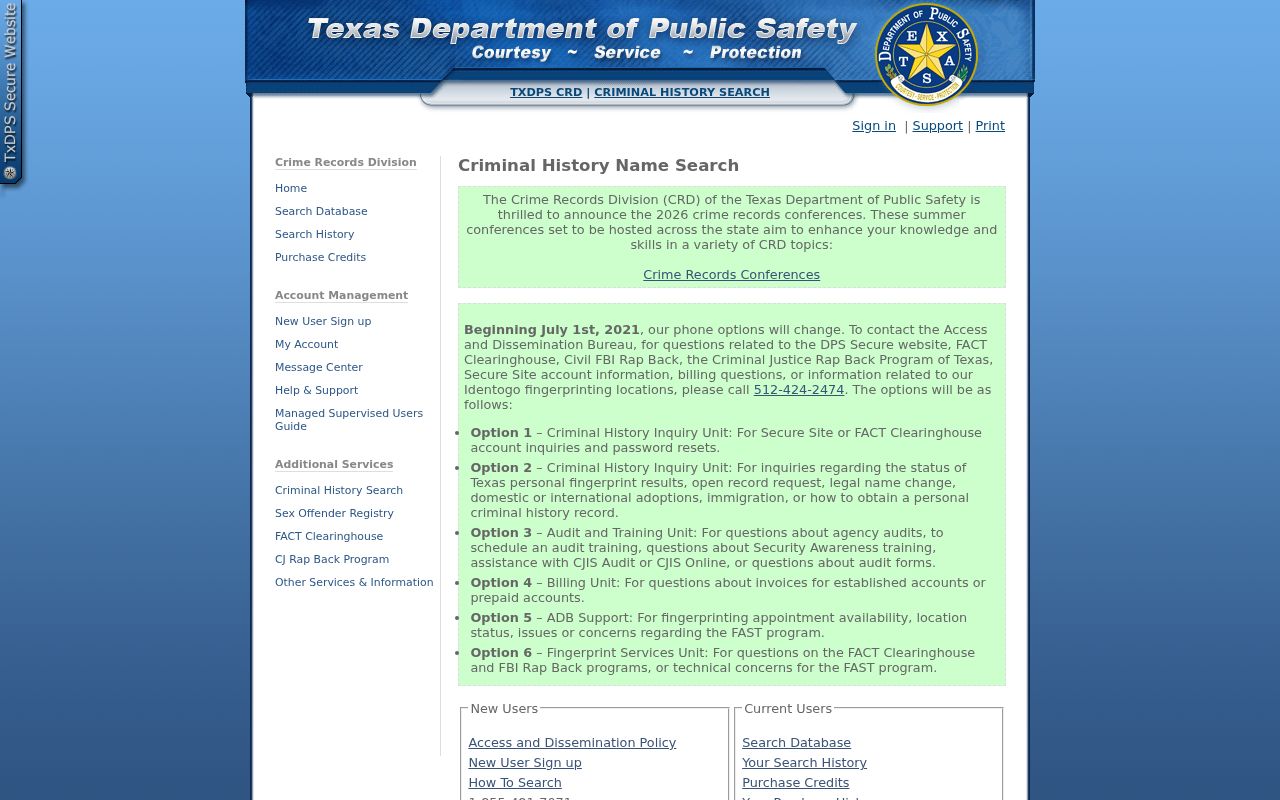
The entry screen leads to a statewide public subset, so use the Roberts County clerk when the goal is the full filed case and its documents.
Roberts County Fingerprint Record Choices
Choose the official product by its scope, not by which screen appears first. A DPS public name check is low cost and can help locate a public Texas result. A DPS personal review ties your fingerprints to your own Texas CCH. The FBI summary covers your own FBI-maintained identity history. None supplies the motions, orders, or complete docket held in a Roberts County criminal court file.
| Official route | Method and scope | Verified base fee |
|---|---|---|
| DPS public online search | Name and demographics; public Texas subset | $1 credit per search, plus payment charges |
| DPS CR-42 by mail | Name, birth date, sex, and race; public product | $10 per person |
| DPS personal review 11FT12 | Fingerprints; your Texas history | $25 base |
| FBI Identity History Summary | Fingerprints; your FBI-maintained file | $18 FBI fee |
| Roberts County clerk file | Name or cause number; local filed case | Fee not published |
The DPS FACT Clearinghouse displays the state fingerprint-service framework and base components.
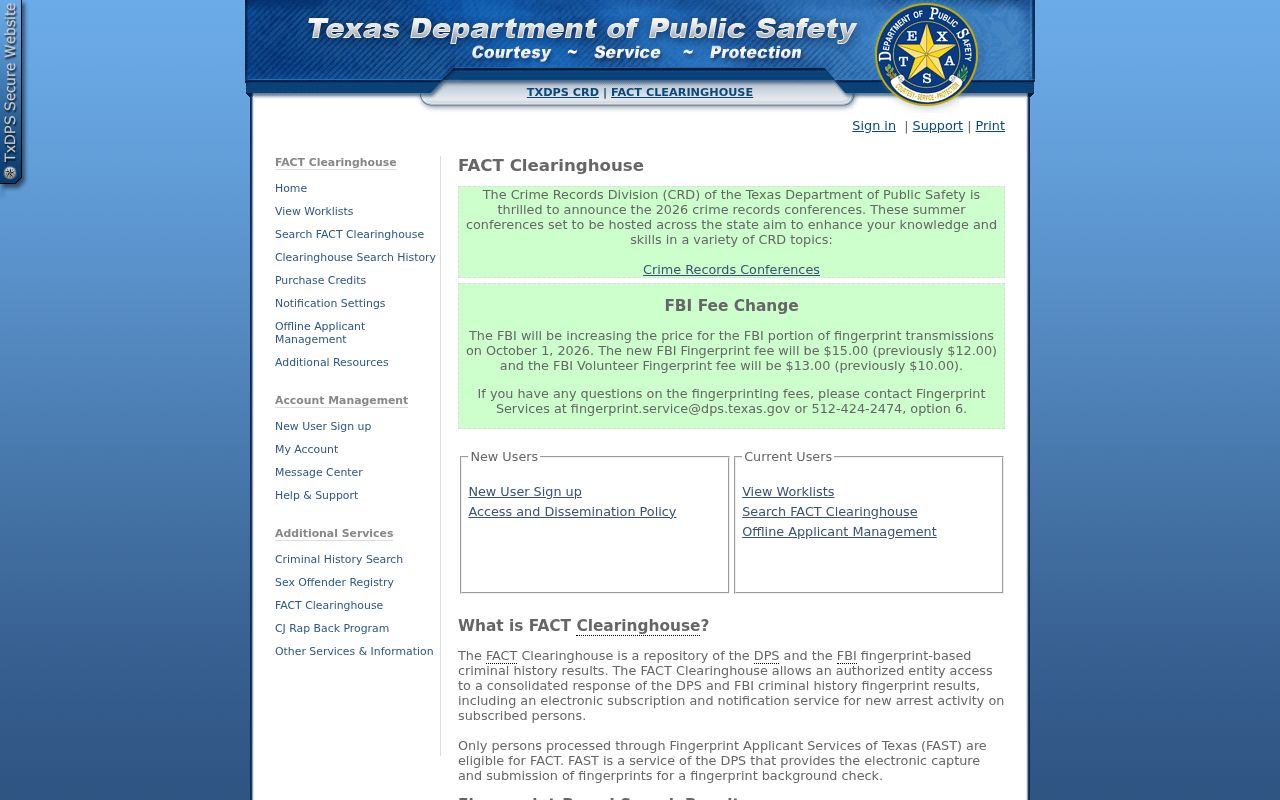
Those base components help explain the fingerprint route, but the authorized service and purpose can change the final amount. The Texas FAST IdentoGO scheduler uses the service code and current location search.
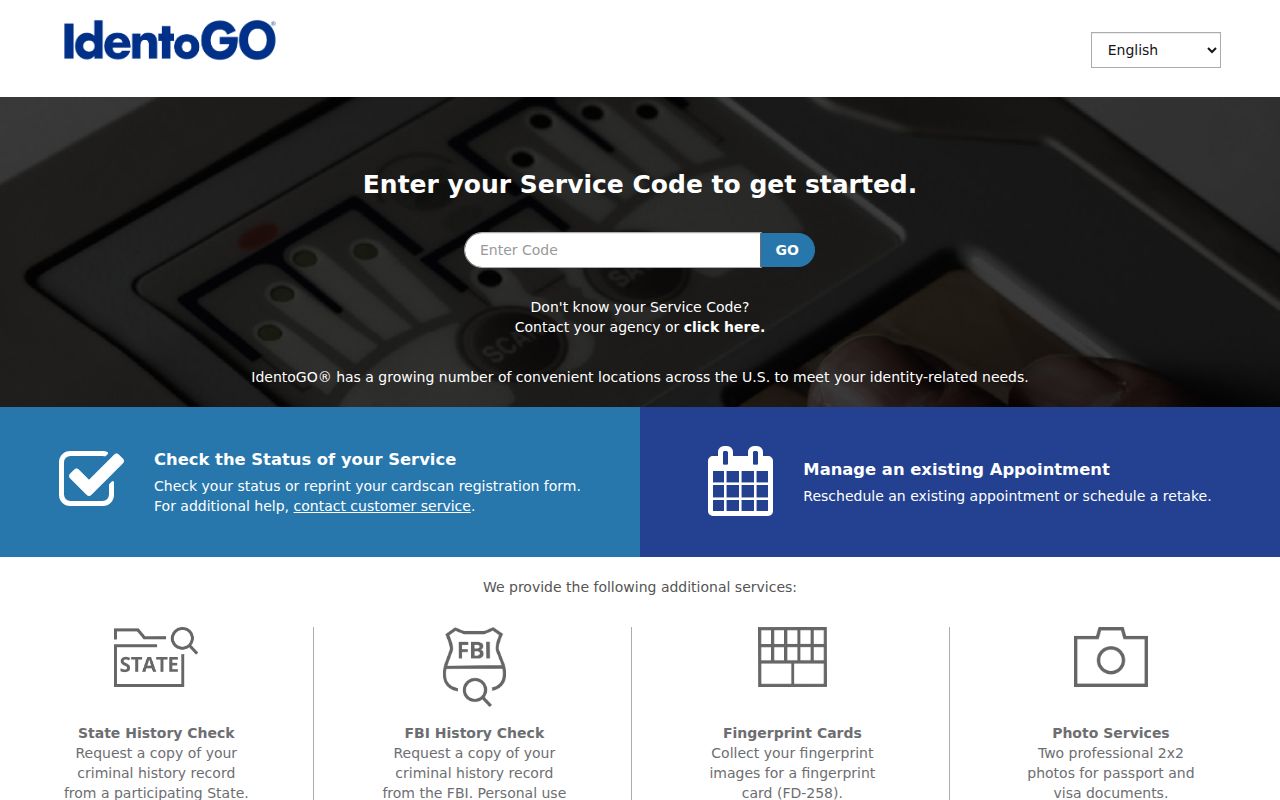
The scheduler is the reliable way to locate an appointment near Roberts County because no permanent county enrollment center was verified.
Criminal Record Types
Roberts County criminal records are grouped by who creates them and what stage they describe. Mixing them can produce a true answer to the wrong question. The main categories are:
- Incident and arrest records describe the sheriff response, alleged offense, arrest basis, booking, bond, and release data.
- Court case files contain the complaint, information or indictment, docket, pleas, orders, judgment, sentence, and appeal activity.
- DPS histories join reported Texas event cycles, though public users see only the statutory subset.
- Warrant and custody records track court process and where a person is held, if that information is releasable.
- Supervision and registry records concern community supervision, parole, or Chapter 62 registration duties.
Some reports sit outside the main criminal case chain. The TxDOT crash-record route sells regular reports for $6 and certified reports for $8, plus applicable processing charges, when the requester has the required qualifying interest and crash identifiers.
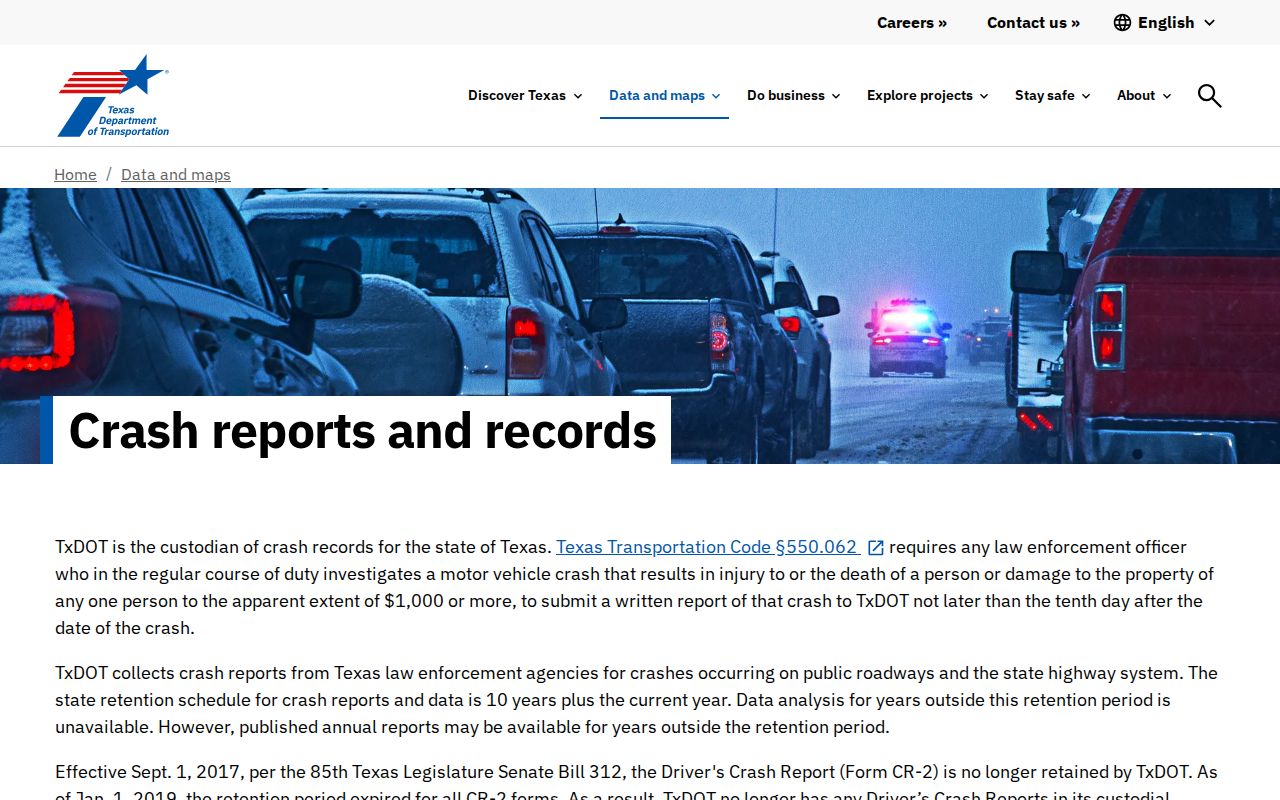
That state order page should be used for crash reports rather than treating a crash file as a general Roberts County criminal-history result. For a person reviewing a federal identity record, the FBI Electronic Departmental Order portal is the official application channel.
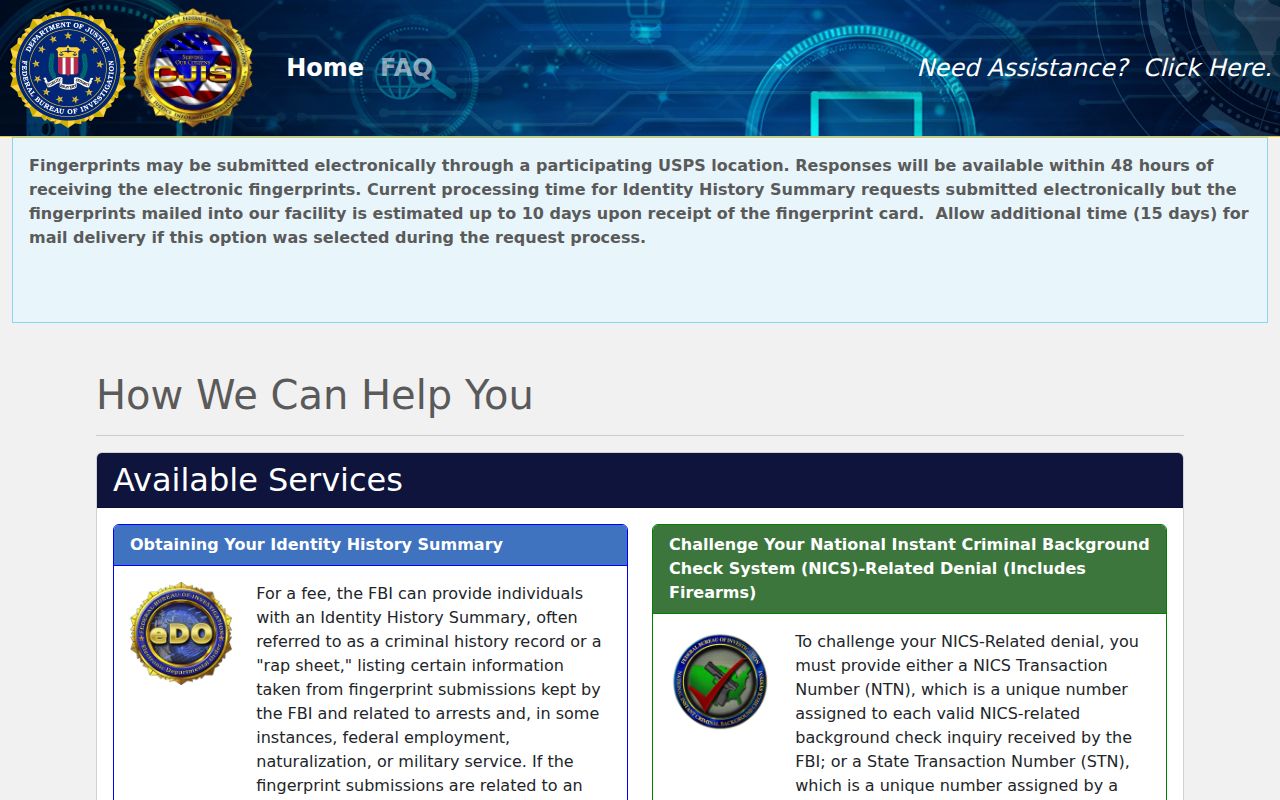
The FBI product is for the subject's own identity history and should not be confused with a Roberts County court search or a public Texas name check.
Roberts County Warrant Record Route
Roberts County has no official public warrant list, most-wanted page, warrant app, or statewide public TCIC search. For your own possible warrant, call the Roberts County Sheriff at (806) 868-3121 for safe instructions. A district or county capias may be checked with the combined clerk at (806) 868-2341. A Justice Court failure-to-appear or capias question belongs with the Justice of the Peace at (806) 868-4111. No Miami municipal court was confirmed, so a city warrant portal should not be assumed.
Ask which court issued the process, the cause or warrant number, and what that court requires next. Do not assume that a payment or unplanned appearance will recall a warrant. Sealed process and active-investigation details may stay closed. A focused written request may seek existing warrant or capias records by person, court, number, and date range, but the sheriff or court may withhold operational or confidential material.
Note: A public search failure does not clear a warrant; only the issuing court or responsible law-enforcement office can confirm its current status.
Inside a Roberts County Criminal Record
The fields depend on the record layer. A DPS history can show names and aliases, birth data, state identifiers, arrest tracking cycles, agency and charge data, prosecutor action, court disposition, and sentence information that agencies reported. A Roberts County court file focuses on the cause number, court, filing date, State and defendant, attorneys, statutes, docket events, pleas, orders, outcome, and sentence. A Roberts County booking sheet instead centers on intake, custody, bond, housing, and release.
| Name & Identifiers | Legal name, aliases, birth data, and record numbers used to distinguish people. |
|---|---|
| Arrest / Booking Data | Arresting agency, intake time, alleged charges, bond, release, and housing information where public. |
| Charges & Statutes | The alleged or filed offense, Texas citation, and offense degree at that stage. |
| Disposition | Dismissal, acquittal, conviction, deferred adjudication, or another recorded result. |
| Sentence | Confinement, fine, costs, restitution, or community-supervision terms ordered by the court. |
| Custody / Supervision | Local custody, TDCJ location, projected release, probation-like supervision, or parole data when available. |
Read the status with its date. An arrest charge can be changed or declined. A dismissal is not the same as an acquittal, and deferred adjudication is not simply a missing outcome. If an entry looks wrong, obtain the underlying Roberts County judgment or source report first. DPS lists (512) 424-7256 for inaccurate criminal-history data, but the source custodian may need to correct its submission before the statewide record changes.
Roberts County Custody Record Gaps
Roberts County publishes no jail roster, booking log, jail app, inmate-information page, or current local capacity statement. A historical Texas jail report listed capacity as three and average daily population as zero for its reporting period. That old figure shows how small the local system has been, but it does not prove today's operating setup. A 2024 county treasurer report recorded a Hemphill County Sheriff inmate expense, which confirms that some outside boarding occurred.
Do not assume every Roberts County detainee goes to Hemphill County. Call the Roberts County Sheriff with the person's full name and approximate arrest time. Ask for the receiving facility and booking identifier. Then contact that official jail for current custody, bond, release, and visit rules. A new arrest may not yet have a filed cause, so a clerk's no-result response may only mean the prosecutor has not filed the case.
Sentenced state custody belongs in the TDCJ Online Inmate Search, not a local roster. Federal custody belongs in the Bureau of Prisons locator. TDCJ results can include a number, facility, offense, county of conviction, sentence, and release or parole indicators. They do not show a Roberts County pretrial detainee. The distinction keeps a local booking search from drifting into the wrong custody system.
Public Access Laws in Texas
The Texas Public Information Act gives the public a route to existing, nonconfidential government records. Send the request to the office that holds the item. Roberts County sheriff reports go to the sheriff. Filed case papers go to the combined clerk. Justice Court records go to that court. Describe the record type, date range, names, case or report number, and desired format. Ask for an itemized estimate before chargeable work. Texas law calls for prompt production, but ten business days is not a universal production deadline. That period often concerns an agency seeking an Attorney General decision to withhold information.
Key Texas laws:
Government Code §§552.021 and 552.221 provide access to existing public information and require prompt handling by the custodian.
Government Code §411.135 defines the conviction and qualifying deferred data DPS makes public.
Code of Criminal Procedure Chapter 55A governs Texas expunction after its 2025 recodification.
Penal Code Chapter 12 sets the basic felony and misdemeanor punishment ranges.
Public access does not mean every field must be released. Active-investigation material can fall under Government Code section 552.108. Juvenile files, protected victim data, Social Security numbers, and other confidential identifiers may be withheld or redacted. The best Roberts County request is narrow enough to find, review, and release without asking the office to answer questions or create a new report.
Roberts County Records at Suite 104
The Roberts County Courthouse at 300 E. Commercial Street in Miami remains the main physical records hub. The combined County/District Clerk is in Suite 104 and can be reached at (806) 868-2341 or debra.shewmake@co.roberts.tx.us. The courthouse is open 8:00 a.m. to 5:00 p.m. Monday through Thursday, including noon, and 8:00 a.m. to noon Friday. Call before travel and ask whether the criminal file is on-site, whether a copy can be emailed, and what plain or certified copy fee applies. Roberts County has not published those criminal search and copy fees.
Felonies are heard in the 31st Judicial District Court. The constitutional County Court may handle Class A and B misdemeanors. Fine-only matters may be at the Justice Court. This court split is more useful than a broad name search because it identifies the correct custodian. Bring the name, approximate filing year, offense, court level, and cause number if known.
County/District Clerk
Suite 104, 300 E. Commercial Street
Miami, TX 79059
(806) 868-2341
Roberts County Sheriff
P.O. Box 66
Miami, TX 79059
(806) 868-3121
Justice of the Peace
P.O. Box 315
Miami, TX 79059
(806) 868-4111
The official Roberts County clerk page is the source for the combined counter, though it also retains duplicated older staff material. Confirm the current clerk when you call.
Sealed, Expunged, and Restricted Records
Texas expunction and an order of nondisclosure do different work. Expunction under Code of Criminal Procedure Chapter 55A can direct qualifying arrest and case records to be destroyed or returned. Nondisclosure under Government Code Chapter 411, Subchapter E-1 generally limits public release but leaves access for named government and other authorized entities. Neither remedy can be judged from one search-result line. Eligibility depends on the whole arrest episode, final outcome, waiting or limitations rules, and any linked charges.
| Feature | Expunction | Nondisclosure |
|---|---|---|
| Main effect | Qualifying records destroyed or returned as ordered | Public disclosure restricted without full destruction |
| Common route | Petition and court order under Chapter 55A | Automatic relief in limited cases or a petition where required |
| Later access | Sharply limited, subject to statutory exceptions | Named authorized entities may still receive information |
Begin with the full Roberts County disposition, arrest identifiers, and your own DPS record if identity or reporting is in doubt. The combined clerk can confirm the filing route and current costs, which Roberts County does not post. List each agency that may hold the record, including the arresting agency, receiving jail, prosecutor, clerk, and DPS. Keep certified copies after an order and allow time for each custodian to process it.
- Disposition
- The recorded result, such as dismissal, acquittal, conviction, or deferred adjudication.
- Deferred adjudication
- Community supervision after a plea or finding without an immediate judgment of guilt, subject to completion.
- Expunction
- The Texas process for destroying or returning qualifying records under Chapter 55A.
- Order of nondisclosure
- An order that generally blocks public release of qualifying criminal-history information without erasing all access.
Roberts County Supervision and Parole Records
Texas calls adult probation community supervision. In Roberts County, the court judgment and docket are the public starting points for learning whether supervision was ordered. The 31st Judicial District Community Supervision and Corrections Department manages court supervision, but operational files and officer details may be confidential. Parole is different. The Texas Board of Pardons and Paroles makes release and revocation decisions, while the TDCJ Parole Division supervises people released to parole or mandatory supervision.
The Texas Board of Pardons and Paroles publishes the decision authority and board-office routes.
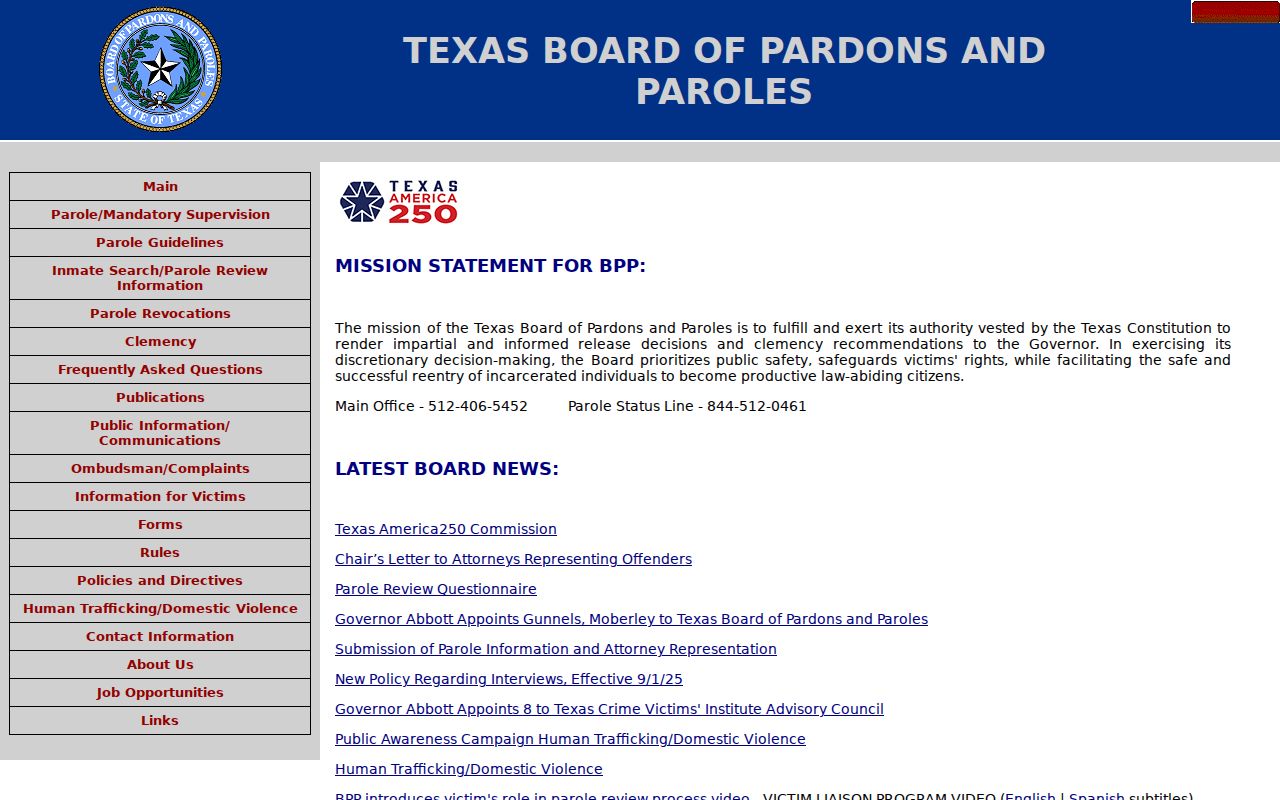
The board resource answers a release-decision question, not a Roberts County probation-status question. The TDCJ Parole Division lists supervision offices and statewide operational resources.
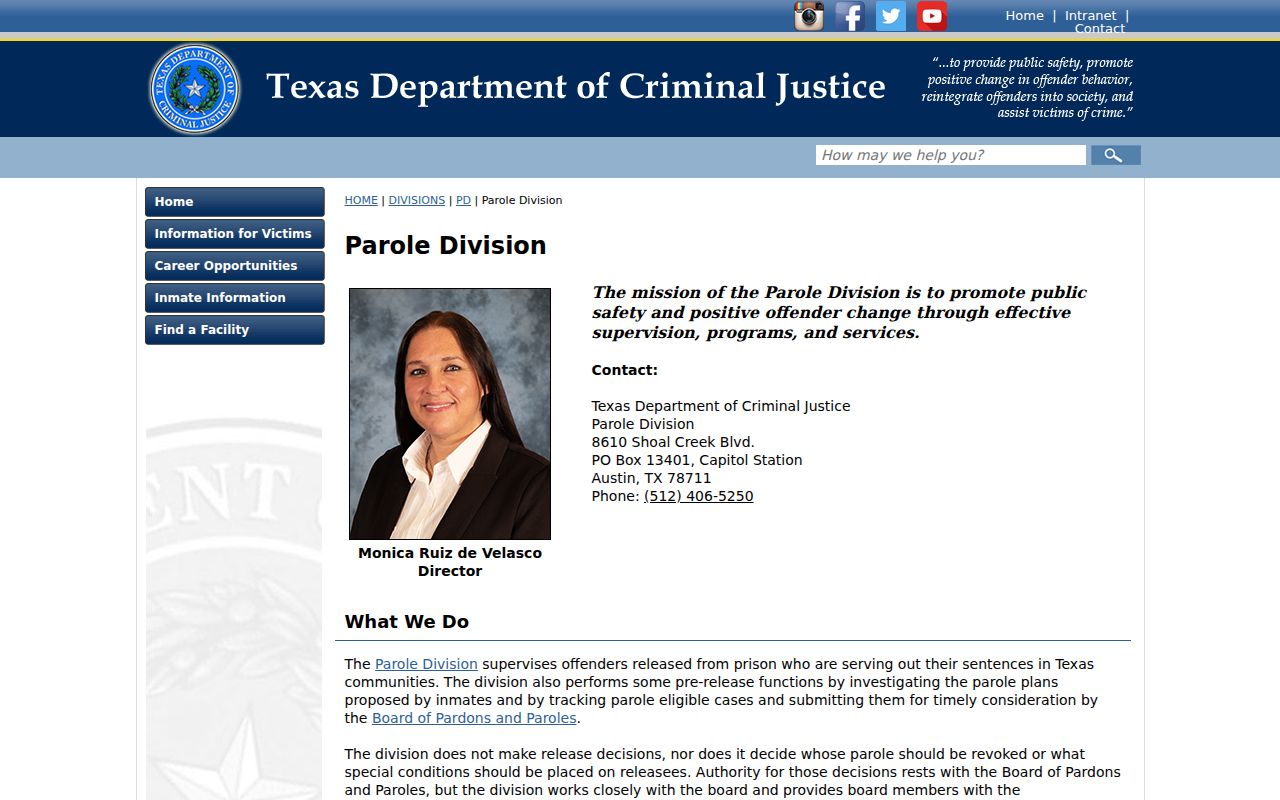
For Roberts County, the useful chain is clerk judgment → CSCD or court contact for releasable supervision facts → TDCJ inmate and parole resources for prison release status. Calling the wrong office can yield an accurate no-result that still answers the wrong question.
Roberts County's 1913 Records Hub
The same Classical Revival courthouse that defines Miami's center still holds the county's core criminal-case counter. Roberts County was created in 1876 and organized in 1889. After a disputed early seat history, Miami won the county-seat contest in 1898. Citizens later voted 116 to 11 for the present building, and it was accepted in October 1913. A restoration preserved the courtroom, tile mosaics, marble wainscot, and other historic fabric before the courthouse was rededicated in 2012.
The history has a practical point. Roberts County spans about 924 square miles and counted 827 residents in the 2020 Census. Miami, with 539 residents that year, is the only incorporated community. The small population and long rural travel help explain why one clerk counter, one sheriff contact, a multi-county district judge, and outside jail boarding matter more than a large portal network.
Raw counts are safer than dramatic rates in a county this small. DPS completeness material recorded one Roberts Sheriff DWI charge in 2022 and one in 2023, but those reporting-workflow counts are not total crime measures. Check the year, reporting agency, and completeness before drawing a conclusion from any Roberts County statistic.
Roberts County Criminal Records by City
Miami is Roberts County's county seat and only incorporated city. No separate Miami Police Department records page, city arrest blotter, police app, or confirmed municipal court lookup was found. Local incident, arrest, booking, and warrant questions therefore begin with the Roberts County Sheriff. Filed county and district cases go to Suite 104, and fine-only matters may belong with the countywide Justice Court. The city record route should not be padded with a second town or an unincorporated place.
Miami Criminal Records
539 residents in 2020 · Sheriff service and county court records, with no verified city police or municipal court portal.
The Miami city record path follows sheriff → receiving jail → combined clerk → Justice Court, with DPS or TDCJ added only when a statewide history or state custody record is the real goal.